Pitch-by-Pitch Odds & MLB Live In-Play Betting
 Available in US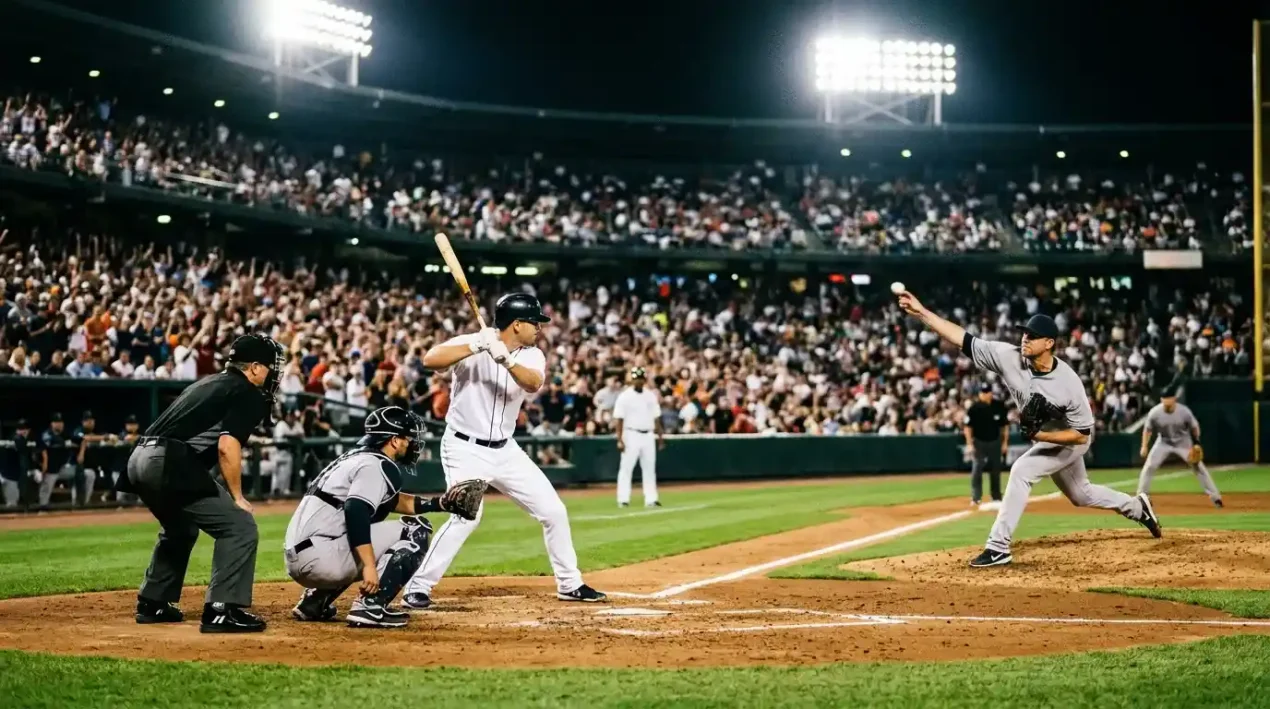
Live betting on MLB has become one of the largest sub-segments of US sports betting handle, and the same dynamic has crept into UK-licensed offerings on MLB markets. For UK punters watching late-night games on streaming services, the live market is genuinely interesting – but it requires understanding what you are actually competing against.
Latency and Pitch-by-Pitch Live Pricing Updates
Live MLB prices update with every meaningful event in the game. A pitch. A walk. A strikeout. A base hit. A pitching change. Each of these triggers the book’s pricing engine to recalculate the implied probability of every active market – moneyline, run line, totals, props, NRFI if it is still active, F5 if applicable.
The recalculation is driven by data feeds that come directly from MLB’s pitch-tracking infrastructure. When the home plate umpire calls strike three, the data flows from the in-stadium tracking system to the book’s pricing engine in well under a second. The price updates. The book republishes the new line. The bettor sees the new number on screen.
The lag between the actual pitch and the bettor seeing the new price is dominated by the slowest link in the chain – usually the bettor’s streaming feed. MLB.TV in the UK runs anywhere from 10 to 45 seconds behind the live data feed depending on your network and the streaming service’s settings. The book’s pricing engine is operating on the real-time feed, while you are watching events that already happened.
What this means in practice: when you see a strikeout on your stream, the price has already adjusted. The over has moved towards being more expensive. The under has moved towards being cheaper. You are reacting to information the market has already absorbed. The window for a bettor to act on what they have just watched is essentially closed by the time they see it.
Markets That Re-Open Every Half-Inning
The structure of MLB lends itself unusually well to live markets because the game pauses between innings, between pitches and between batters. Each pause is a moment when the book can suspend, re-price and re-open the market with the bettor having a clear opportunity to act on the updated price.
Half-inning totals open at the top of each new inning. The line might be 1.5 runs for the next inning, with over and under priced around standard juice. These markets resolve in about ten to fifteen minutes of game time, settle quickly, and produce a constant stream of small markets that some bettors enjoy for the engagement.
Next-batter outcome markets open between batters. Will this hitter walk, strike out, hit a single, hit for power, or get out without reaching? Each option has its own price, recalculated in real time based on the count, the pitcher’s pitch mix, the situational context. These are among the highest-juice markets in live MLB – the book’s margin can run as high as 12 to 15 per cent across all options summed.
Next-pitch markets are the most granular and the most contested. Ball, strike, foul, hit, out – each priced separately. The 2025 integrity reforms reshaped this market significantly, with a 200-dollar cap on individual pitch props and exclusion from parlay constructions at major US sportsbooks. UK operators have followed similar protocols on most micro markets. The article on MLB pitch prop bet limits goes into the detail of how that regime was implemented.
Run line and moneyline markets stay open through the game, suspending briefly during action and re-opening between batters. Totals markets behave similarly. Props on specific player outcomes – total strikeouts for a starter, total hits for a batter – remain active until the player is removed from the game or until the relevant statistical threshold is decided.
Latency, Streaming Delay and Why Live Bets Suspend
The biggest practical issue for UK punters in live MLB markets is latency, and it operates at multiple layers.
The first layer is the streaming delay. MLB.TV transmits a feed that is between 10 and 45 seconds behind real time, depending on bandwidth, server location and your specific device. Some operator apps display a live game feed that runs even further behind because they add buffering for stability. The result is that you might be watching a pitch that was thrown twenty seconds ago. By the time you decide to act, two more pitches have happened. The price you see is a stale snapshot of a market that has moved on.
The second layer is the suspension behaviour of the betting markets themselves. Books suspend live markets during contested action – between the pitch leaving the hand and the call being made, between the swing and the play resolving. The suspension lasts a few seconds but it is precisely the moment when the price would otherwise move sharply. Bettors who try to time their bets to land just before action resolves find that the market is closed during exactly those windows.
The third layer is the back-end risk management. Books deploy automated systems that detect when a single account is consistently betting just after meaningful events. Repeated patterns trigger limits – slower acceptance, lower stake caps, manual review of suspicious activity. UK operators apply these systems to MLB markets alongside other sports, and they are aggressive on live markets specifically because that is where most of the abusive patterns appear.
For the casual UK punter, the practical advice is to treat live MLB markets as entertainment rather than as a profit opportunity. The structural disadvantages – stream delay, suspension timing, risk management – combine to make consistent profit in live MLB markets extremely difficult for anyone not operating with professional infrastructure. Engagement, yes. Edge, rarely. Stream latency alone in UK households running on standard broadband adds enough delay to make a five-second betting window functionally unusable.
How Big Live Betting Has Become in MLB
The scale of live betting has grown dramatically over the past five seasons. Live betting now accounts for roughly half of all sports betting handle on mature US markets in 2025. Within MLB specifically, the proportion is even higher because the structure of the game – slower pace, more pauses, distinct decision points – favours in-play wagering more than continuous-action sports like basketball or football.
The volume has implications for how UK operators offer MLB markets. Books that traditionally treated baseball as a low-volume regional product have expanded their live offerings to compete for handle. UK punters now have access to deeper live menus than they did three or four seasons ago, with more markets available and tighter pricing on the most liquid options.
Industry observers at major operators have been candid about how the handle distribution affects their book. John Murray, the Executive Director at Westgate Las Vegas SuperBook, summed up the team-by-team dynamic for the 2025 World Series simply: “We do really well on the Jays and lose to the Dodgers.” That kind of asymmetric exposure is exactly what live betting amplifies – every pitch creates an opportunity for the book to re-price its exposure on both sides. The books that adapt fastest to handle imbalances are the ones that maintain healthy margins on baseball specifically.
For the UK bettor, the takeaway is that the live MLB market is more developed and more competitive than it used to be, but it is also more efficient. The handle growth has attracted both more bettors and more sophisticated risk management. The market is not necessarily a worse place to bet than it was – it is just a different one, with different rules of engagement.
Live Betting Questions
The two questions UK bettors ask most about live MLB markets are about why suspensions happen so frequently and about whether the hold percentage on live bets is higher than pre-match. Both have direct answers grounded in how books actually operate their in-play pricing.
Why do live MLB markets suspend so often between pitches?
Because each pitch is a discrete event that can sharply change the implied probability of every active market. Books suspend the line during the moment of action – from the pitch leaving the hand through the play resolving – to prevent bettors from acting on information the pricing engine has not yet processed. The suspension typically lasts a few seconds, then the market re-opens at the new price. This is normal operation, not a malfunction.
Is the hold higher on live MLB bets than pre-match?
Yes, usually meaningfully so. Pre-match MLB moneyline hold runs around 3.5 per cent on standard prices. Live moneylines often run 5 to 7 per cent depending on the in-game context, and live props can climb to 10 per cent or higher. The book justifies the wider margin as compensation for the increased operational risk of pricing in real time. For the bettor, that translates to needing a meaningfully higher hit rate to break even on live markets.
This material was created by the Mound & Margin team.
Related posts
Unit Sizing & MLB Bankroll Management UK

Algorithmic Projections & MLB Handicapping Models UK