Integrity Reforms & MLB Pitch Prop Limits UK
 Available in US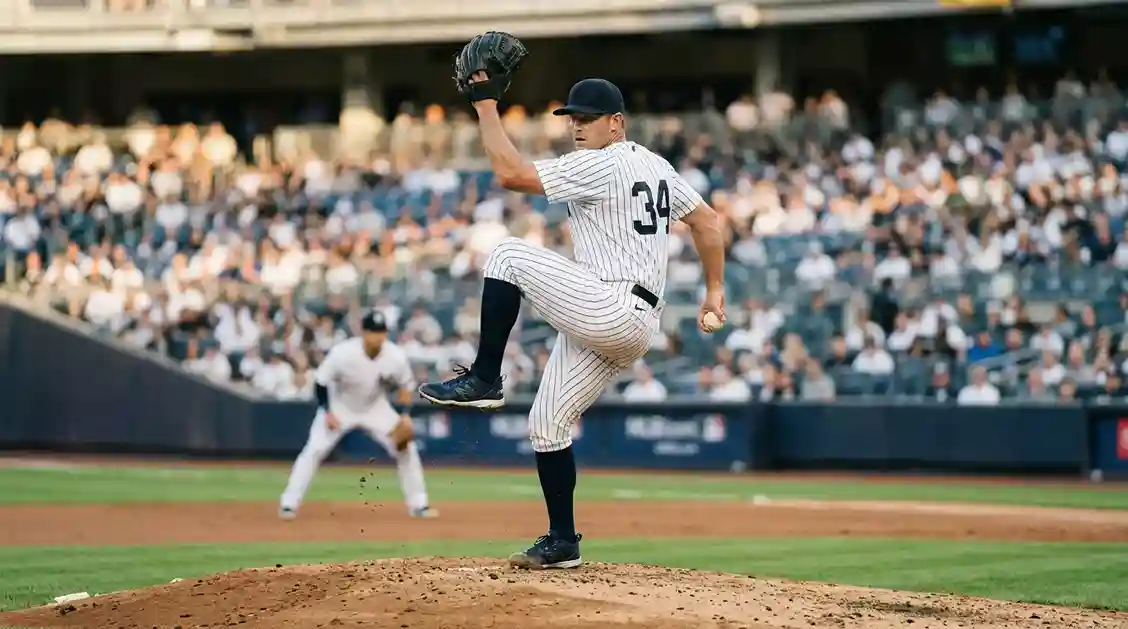
This guide walks UK punters through what the 2025 pitch prop reforms actually did, why they came in, and how the new limits reshape what’s worth betting on micro markets. Most of the public coverage framed it as a US regulatory story. The practical effects are global because the major books operate across jurisdictions and the integrity protocols travel with the operator.
Regulatory Changes to MLB Pitch Prop Markets
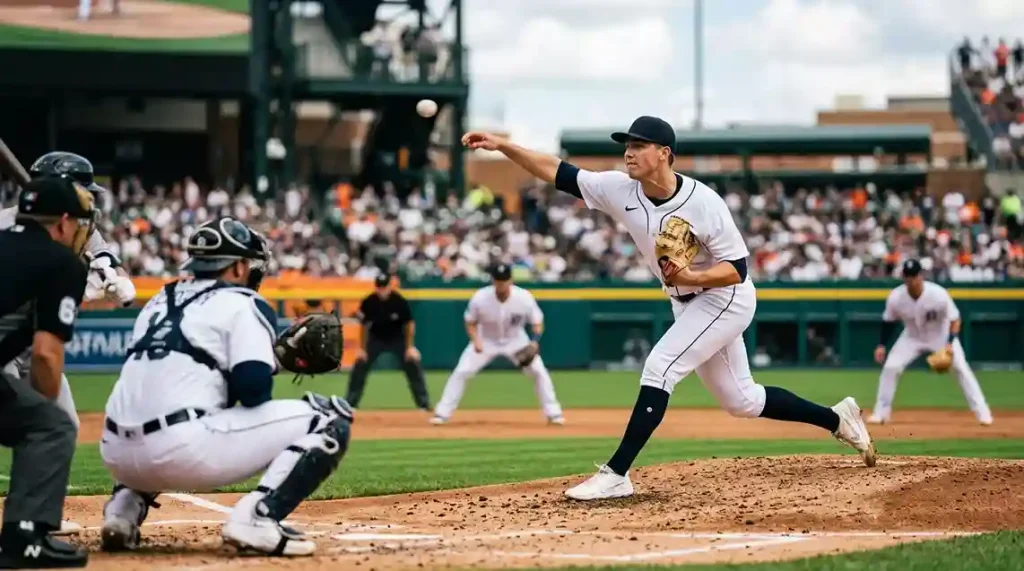
Pitch props are markets on individual pitches – ball, strike, foul, hit-in-play, out-on-this-pitch – priced separately for each delivery. They feel like the most granular form of in-play betting because they are. A typical MLB game has roughly 290 pitches, and during peak periods around 2024 you could find books offering markets on a substantial share of them with stakes up to four figures.
The granularity is what made them attractive to the wrong people. A pitch outcome involves exactly two participants – pitcher and catcher – and the catcher’s role in shaping that outcome through pitch selection and framing is enormous. Compromising one pitcher in one inning to throw, say, a non-competitive first pitch is not the same scale of integrity breach as shaving points across a game. The corruption surface is smaller, the act is more deniable, and the betting volume on individual pitches in 2023 and 2024 was large enough that a coordinated scheme could move meaningful money without showing up obviously in handle reports.
Several federal investigations in late 2024 produced enough evidence of coordination on pitch markets that the major US sportsbook trade body moved before regulators did. By spring 2025, the new framework was in place. Every operator licensed in a US state had limits in place across the next-pitch ecosystem, and the integrity monitoring on those markets was strengthened across the board.
The 200-Dollar Cap and What It Actually Restricts
The headline number is 200 dollars maximum stake on any single pitch prop. That cap applies per market, per account, per pitch – meaning a punter cannot stake 200 dollars on the next pitch being a ball, then another 200 dollars on the same pitch being a strike, in some kind of straddle. The book treats correlated next-pitch markets as a single position.
Below the cap, the markets themselves got narrower. Most operators removed pitch-by-pitch outcome props from their parlay builders entirely, which kills the structure where a punter would chain 10 individual pitch outcomes at long odds for a five-figure payoff. Some books retained inning-level props inside parlays but excluded pitch-level entirely. UK-facing books followed the US protocols on most micro markets even where regulation did not require it – the cross-border infrastructure made enforcing two different policies operationally messy, and the books preferred consistency.
What’s still available without the cap restriction: inning totals, at-bat outcomes for an entire plate appearance, strikeouts on a given batter for the full at-bat. These are slower markets, they involve more participants, and the integrity surface is comparable to traditional in-play markets. The cap-and-exclusion regime targeted the granularity that made manipulation easiest, not in-play betting as a category.
Why Integrity Monitoring Sits at the Centre
The commissioner’s office has been clear for several years about where the league sees the structural risk. The most important undertaking and really the bedrock of the league’s relationship with the sportsbooks is the ability to monitor betting activity, and the ability to discern inappropriate patterns is critical. That framing, repeated across hearings and trade statements during 2024 and 2025, drove the practical architecture of the new regime.
The monitoring works through data sharing. Every licensed US operator now feeds real-time wagering data to a third-party integrity service contracted by the league. Unusual patterns – concentration of stakes on a single pitch outcome, correlated wagering across accounts in a narrow time window, sudden volume spikes inconsistent with public information – flag for human review. The league then has the contractual right to suspend markets, void wagers retrospectively, and refer matters to law enforcement.
The 200-dollar cap was paired with this monitoring because the books and the league agreed that a low cap reduces the upside of any single corrupt event to the point where the scheme becomes uneconomic. If the maximum you can extract from compromising one pitch is 200 dollars times the odds, you need a large coordinated network across many accounts to make the scheme worthwhile, and that network is what the monitoring is designed to catch.
Practical Effects on UK Punters and the Live Markets
For UK punters who never wagered four figures on individual pitches, day-to-day the experience changed less than the headlines suggested. The pre-match markets are untouched. Run lines, totals, moneylines, team props – all of these operate exactly as they did in 2023. Even live betting on inning totals and at-bat outcomes works the way it always has.
Where punters feel the change is in parlay construction. The old playbook of building a long-odds in-play parlay across 10 pitch outcomes is gone at every major book. The remaining structures are coarser – you can still build live parlays, but they have to use markets at inning level or above, which means the odds compress and the entertainment value of the construction drops. Live betting accounts for roughly half of total handle on mature US markets, and the structure of that volume shifted noticeably during 2025 toward larger-stake, lower-frequency wagers as the granular markets thinned out.
The other practical effect is on account profiling. Books that retained any kind of pitch-prop offering apply much tighter limits on accounts that show consistent profit on those markets. The historical pattern of allowing sharp accounts to play freely on micro markets and recouping losses through casual customers stopped working at the 200-dollar cap. A profitable pitch-prop bettor cannot scale, so books no longer have a commercial reason to tolerate the activity.
How the Regime Compares to Other Sports
The pitch-prop response was unusual in scale because no other sport has a comparable market structure. NBA shot-attempt props exist but were always smaller markets with different timing. Tennis point-by-point props faced similar concerns in 2024 and 2025 but the major tennis bodies operated under different integrity frameworks. The MLB response stands out because the league moved fast, the trade body moved with it, and the cap-and-monitoring architecture was unified across operators within roughly six months.
Some commentators argued the regime overcorrected – that the 200-dollar cap is conservative relative to the actual integrity risk and that legitimate liquidity in those markets is now permanently suppressed. The counter-argument from the league and the books is that 2025 was already a record year for handle and revenue without the micro-market liquidity, that brand health scores for MLB hit 26.9 in 2025 as the top spot among US leagues with a 39 percent improvement versus 2022, and that suppressing one corner of the offering to protect the broader product was straightforwardly the right call. Both arguments contain truth. The regime as it stands is the working compromise.
Pitch Prop and Integrity Questions UK Bettors Ask
The questions that come up most often when I explain the regime are practical rather than philosophical. Punters want to know what they can still do, not whether the rules are fair. The two below cover the cases that I see most.
If you take one thing from this, take that the integrity architecture is now permanent and will likely extend rather than retract over time. The granular end of MLB betting is structurally different from what it was in 2023, and that change is not coming back. Adjust the strategy, not the expectations.
Can I still bet on individual pitches at any UK sportsbook?
At many UK-facing operators yes, but with the 200-dollar equivalent stake cap and exclusion from parlay builders. The market exists for entertainment volume but cannot be scaled.
Does the 200-dollar cap apply to GBP stakes for UK punters?
Most operators convert the cap to the equivalent in GBP at the prevailing rate, typically around 160 pounds. Some books apply a flat 200 GBP cap. Check the market rules at your operator before placing.
This material was created by the Mound & Margin team.
Related posts
Unit Sizing & MLB Bankroll Management UK

Algorithmic Projections & MLB Handicapping Models UK