Tie Odds & Three-Way Moneyline Baseball Betting
 Available in US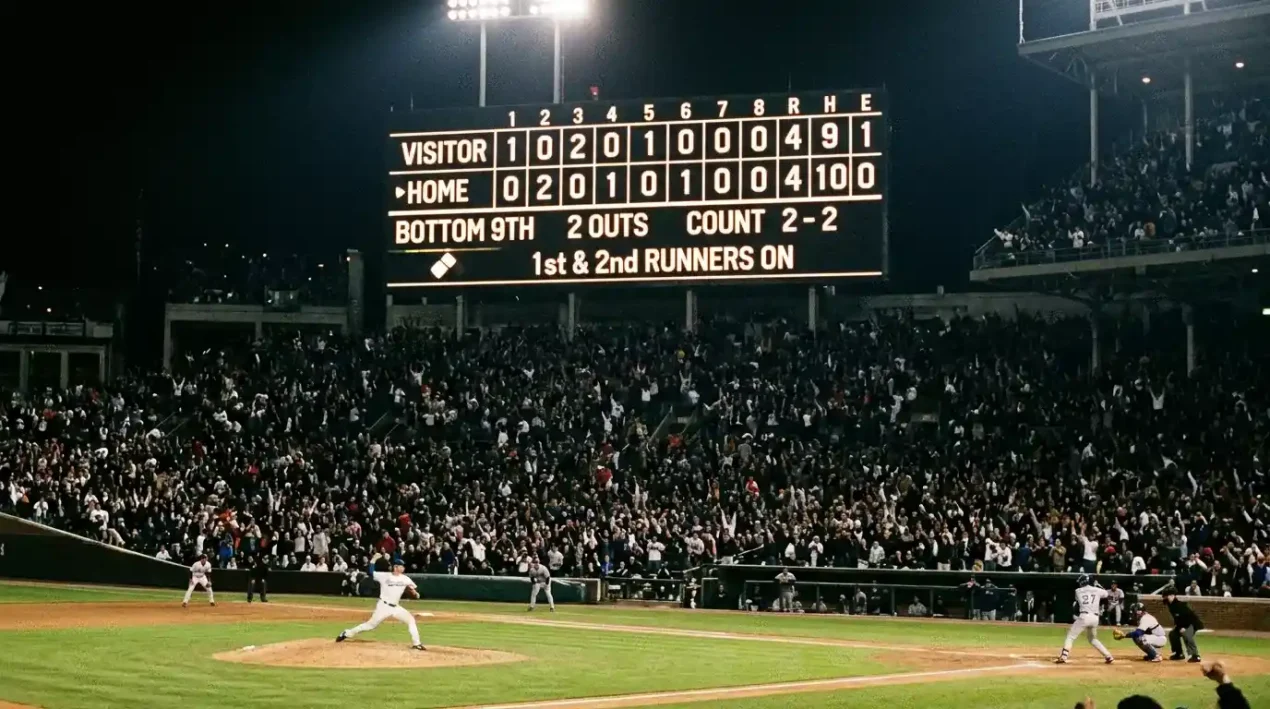
Three-way moneyline is a market many UK books offer alongside the standard moneyline, and it looks very similar at a glance. Three options, one of which is a tie. What it actually does is restrict the question to “what is the score after exactly nine innings?” – and that restriction changes the maths in ways you need to understand before you stake.
Differentiating Three-Way Markets from Standard Moneylines
The standard MLB moneyline is binary. Either the home team wins, or the away team wins. There is no tie outcome because extra innings exist – every game eventually has a winner. That is why you only ever see two prices on the moneyline.
The three-way moneyline introduces a third option: the tie. But here is where it gets careful – the tie does not mean “the game ended tied”. The tie option means “the score after nine innings was level, and the game went to extra innings”. Whether the away or home team eventually wins in the tenth, eleventh or fifteenth inning does not matter. If the regulation result is a tie, the three-way “tie” wins, and both the home and away three-way options lose.
This catches people. If you back the Yankees at three-way 2.05 in decimal, you are betting that the Yankees will be ahead at the end of the ninth inning. Not that they will win the game. Those are different outcomes in roughly seven to nine per cent of MLB games – the share that go to extras.
The standard moneyline at decimal 1.85 for the same Yankees would pay if they win in any inning. The three-way at 2.05 only pays if they win in regulation. That is why the three-way price is longer than the standard line – you are giving up the extra-innings rallies in exchange for a slightly bigger payout when the regulation result goes your way. The tie option, meanwhile, sits at a long price because tied regulation games are uncommon.
Why the Tie Option Pays Long Odds
The tie price is where the market reveals what it really thinks about MLB game variance.
You will see three-way tie options priced anywhere from 8.00 to 12.00 in decimal depending on the matchup. That implied probability is between eight and 12 per cent. The actual rate at which MLB games end the ninth inning tied sits in the seven to ten per cent range, varying season to season. The book is pricing close to the true rate, with a meaningful margin baked into the long side because the public never wants to bet a tie.
What that means is the tie is not a value option for most punters. The book knows people will not naturally gravitate to it, so it does not need to shorten the price to balance action. You are not getting an inflated number because nobody bets it – you are getting close to the no-vig fair price.
Where the tie occasionally earns its place is in specific game scripts. Two ace pitchers facing each other in a pitcher’s park with cold weather is the textbook spot – low scoring, tight margins, increased chance that nine innings ends 2-2 or 1-1 with the bullpens trading scoreless frames. Even in those spots, the implied probability of a regulation tie still only climbs to maybe 12 or 13 per cent, and you have to be confident that your read is sharper than the book’s. Most of the time it is not.
A friend who runs his own model treats the tie option as an information signal rather than a bet. When the tie price drifts shorter than 9.50 across multiple books, that tells him the consensus is for a low-scoring tight game – useful intelligence whether or not he stakes. That is the right relationship with the three-way tie: read it, do not always back it.
When a Three-Way Is the Sharper Play
Three-way pricing offers genuine value in specific situations. Identifying them is not difficult, but it requires resisting the gravitational pull of the standard moneyline.
The first scenario is when you have a strong read on a starting pitcher matchup and you expect a low-scoring game with both bullpens likely to enter. In that environment, the chance of a regulation tie is genuinely elevated, and the standard moneyline includes too much extra-innings noise. Backing the favourite three-way removes the long-tail variance and gives you a better price on the read you actually have – which is that this team’s starter outperforms the other team’s starter through six innings.
The second scenario is when you want to add a small-stake long shot to a slate without committing to a parlay. The three-way tie at 9.00 or 10.00 in decimal is a clean, single-leg long shot that pays well when it lands. It will not land often, and the maths does not favour you over many bets, but as an occasional add to a routine slate it is a more honest punt than a five-leg same-game multi.
The third scenario is the one I see least often used and which I think is genuinely sharp: laying the three-way as a hedge. If you have a futures bet on a team to win the World Series and that team is in extra innings of a deciding playoff game, the three-way market closes too early to use for hedging. But during the regular season, when you have a futures position and a specific game matters to that position, the three-way can be a cleaner hedge than the standard moneyline because the price is longer on the side you want to back. The three-way moneyline is also the basis for several specialist markets that build on the regulation-time concept – for context on broader market mechanics, the article on MLB moneyline betting covers the standard two-way version in full.
Three-Way Questions UK Bettors Ask
The two questions that come up most often about three-way markets are about settlement boundaries. Both have answers that some operators get wrong in their help pages, which is why I find myself answering them in person at least once a week.
What happens to a three-way moneyline if the game goes to extra innings?
The three-way market settles on the score at the end of the ninth inning. If the score is tied after nine, the tie option wins, regardless of who ultimately wins in extras. Both team options lose. If one team is ahead after nine, that team’s three-way wins. The eventual extra-innings result has no bearing on the three-way settlement.
Does the tie option in three-way moneyline include 0-0 after nine innings?
Yes. Any tied score after the regulation nine innings – 0-0, 2-2, 5-5 or anything else – settles the tie option as the winner. The market does not care what the score is, only that it is level. A 0-0 game after nine is rare in modern MLB but it happens, and when it does, the tie option settles in your favour at the long price you backed.
This material was created by the Mound & Margin team.
Related posts
Unit Sizing & MLB Bankroll Management UK

Algorithmic Projections & MLB Handicapping Models UK