Sportsbook Margins & MLB Vig and Juice
 Available in US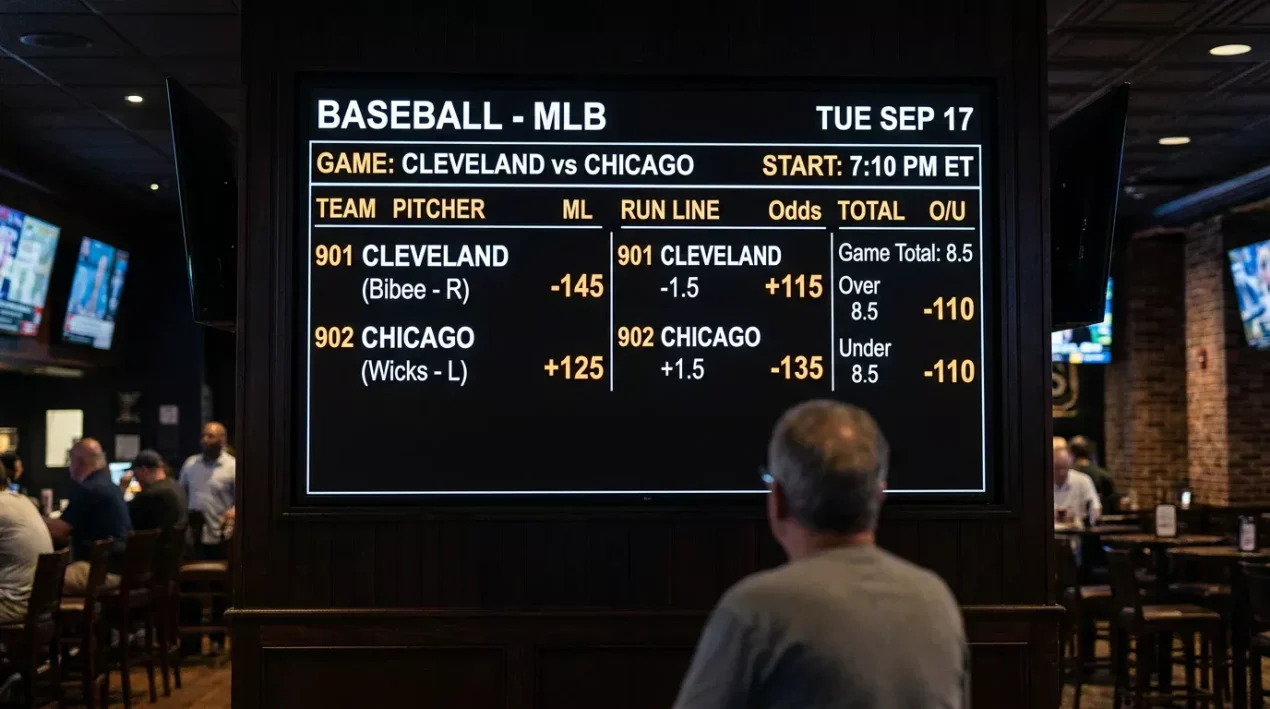
Vig is the cost of doing business with a sportsbook. It is built into every price. Most bettors know it exists in the abstract; far fewer can calculate it on a specific market and tell you what fair price they should be aiming for. Once you can, you stop wondering why winning half your bets is not enough.
Identifying Bookmaker Vig in MLB Pricing
Vig – also called juice, hold, margin or overround depending on who is using the word – is the amount a sportsbook builds into the price beyond the true probability of the outcome. It is how the book makes money over many bets, regardless of which side wins on any individual game.
Take the simplest example. A coin flip should pay decimal 2.00 on heads and 2.00 on tails. Stake a pound, get two pounds back when you win, lose your pound when you lose. Over many flips you break even. That is a no-vig market.
Now a real sportsbook prices the coin flip. Heads at 1.91. Tails at 1.91. The implied probability of each side is 52.4 per cent. The two sides add to 104.8 per cent. The book has built in 4.8 per cent extra above the true 100 per cent – and that 4.8 per cent is the vig. If half the money comes in on each side, the book pays out roughly 95.2 pence on every pound staked and keeps 4.8 pence as profit. The bettors collectively are guaranteed to lose, even though any individual bettor can win their single bet.
On standard MLB markets, vig sits in this 4.5 to 5 per cent range across totals and run lines. On moneylines the vig is asymmetric – usually lower than on totals because the underlying probabilities are not 50-50. On props the vig is higher, sometimes climbing to 6, 7 or even 8 per cent on individual player markets where the book has less precise information.
Measuring Vig on a 110/110 Line
The standard MLB totals market is priced at -110 on both sides – or decimal 1.91 on the over and 1.91 on the under. This is the benchmark for calculating vig and it is the most useful single calculation a UK bettor can know.
Step one: convert both sides to implied probability. 1 divided by 1.91 equals 0.524, or 52.4 per cent. Both sides are 52.4 per cent.
Step two: sum the implied probabilities. 52.4 plus 52.4 equals 104.8 per cent.
Step three: subtract 100. The 4.8 per cent overage is the theoretical hold – the maximum percentage of stake the book extracts when bets are evenly balanced. That is the vig on a standard -110/-110 line.
What this number tells you in practice: to break even at this juice you need to win 52.4 per cent of the time. Hit 52.4 exactly and you neither win nor lose over many bets. Below it you lose. Above it you win. My friend’s 87 wins from 168 bets put him at 51.8 per cent – slightly below break-even – which is why his account was slowly draining despite hitting close to half his bets. That gap between 51.8 and 52.4 is the difference between profitable and unprofitable, and it sits entirely inside the vig.
Vig Across MLB Markets: Moneyline, Run Line, Totals, Props
Different MLB markets carry different vig levels. Understanding which markets the book is taking more from helps you pick where to focus.
The moneyline carries the lowest standard vig because the prices are unequal. A typical moneyline of -150 / +130 implies 60 per cent on the favourite and 43.5 per cent on the underdog, totalling 103.5 per cent. The hold is 3.5 per cent – meaningfully tighter than the 4.8 per cent on a -110 line. This is why sharp bettors who play volume tend to concentrate on moneylines, especially on books that offer the so-called dime line where the hold compresses further to around 2.3 per cent.
The run line at standard -110/-110 carries the full 4.8 per cent hold, identical to totals. The 1.5-run spread is balanced enough on most matchups that the book can apply standard juice without skewing the market.
Totals at -110/-110 carry the same 4.8 per cent. Some markets see the line shaded to -115/-105 or -120/+100, which adjusts the implied hold slightly but keeps it in the same ballpark.
Props are where the vig really climbs. A typical anytime home run market might have implied probabilities adding to 110 or 115 per cent across all listed batters – a hold of 10 to 15 per cent. Strikeout overs at -125 versus unders at +105 imply a hold around 6 per cent. Same-game multis often have hidden additional margin baked into the correlation pricing on top of the visible vig, sometimes reaching 8 to 12 per cent total when you back out the math.
This is also part of why the industry watches the broader regulatory environment so closely. The American Gaming Association’s Bill Miller put it directly in early 2026 – 2025 was another strong year, but the AGA does not take gaming success for granted, and the battle against prediction markets is a defining fight for the industry. That battle ultimately bears on what kind of margins regulated US books can sustain, which in turn shapes what UK operators offering MLB markets see in their own pricing models. Vig is not just maths – it is the central commercial mechanism of every legal sportsbook on both sides of the Atlantic.
Calculating a No-Vig Price
Once you can measure the vig on a market, you can calculate what the price would be without it. This is called the no-vig fair price, and it tells you what the book’s true assessment of the outcome is, stripped of margin.
Take a moneyline of decimal 1.67 / 2.30. Implied probabilities: 60 per cent / 43.5 per cent. Sum: 103.5 per cent.
To strip the vig, divide each implied probability by the sum. 60 divided by 103.5 equals 58 per cent. 43.5 divided by 103.5 equals 42 per cent. These two no-vig probabilities sum to exactly 100 per cent.
Now convert back to decimal odds. 1 divided by 0.58 equals 1.72. 1 divided by 0.42 equals 2.38. The no-vig fair prices are 1.72 on the favourite and 2.38 on the underdog. Anything you can get longer than 1.72 on the favourite or 2.38 on the underdog represents value relative to the book’s own assessment.
This calculation is the foundation of line shopping. If one book has the favourite at 1.67 and another has it at 1.72, both books think the favourite is the same probability – but the second book is offering you the no-vig fair price, while the first is taking the full hold. The five-point gap is genuine value for the bettor who shops.
The relationship between vig levels and how books like the dime line compress them is worth understanding in detail, and the article on the MLB dime line walks through how the lower-margin alternative works and where it shows up on UK-facing books.
Vig Questions
Two questions about vig come up consistently from UK punters. The first is about why prop markets feel so expensive – and the answer is in the hold structure. The second is about what the actual industry-wide hold percentage looks like in practice, which has a number attached to it from recent US data.
Why is vig higher on MLB props than on the moneyline?
Because the book has less precise information about prop outcomes and needs more margin to protect against unknown bettor edges. A pitcher strikeout total or batter home run market involves player-specific variables that are harder to model than a team-level moneyline. The book builds in extra cushion to cover this uncertainty, which shows up as higher implied hold – typically 6 to 8 per cent on standard props compared with 3.5 per cent on moneylines.
What hold percentage do US sportsbooks average across MLB?
The average national hold on US sports betting in 2025 was around 10.15 per cent across all sports combined. MLB specifically tends to run lower than that average – books typically report MLB hold in the 6 to 8 per cent range, because moneyline volume drags the overall figure down. UK operators offering MLB markets generally show similar implied holds when you back out the maths from posted prices.
This material was created by the Mound & Margin team.
Related posts
Unit Sizing & MLB Bankroll Management UK

Algorithmic Projections & MLB Handicapping Models UK