Wind Impact on Totals Lines & MLB Weather Betting
 Available in US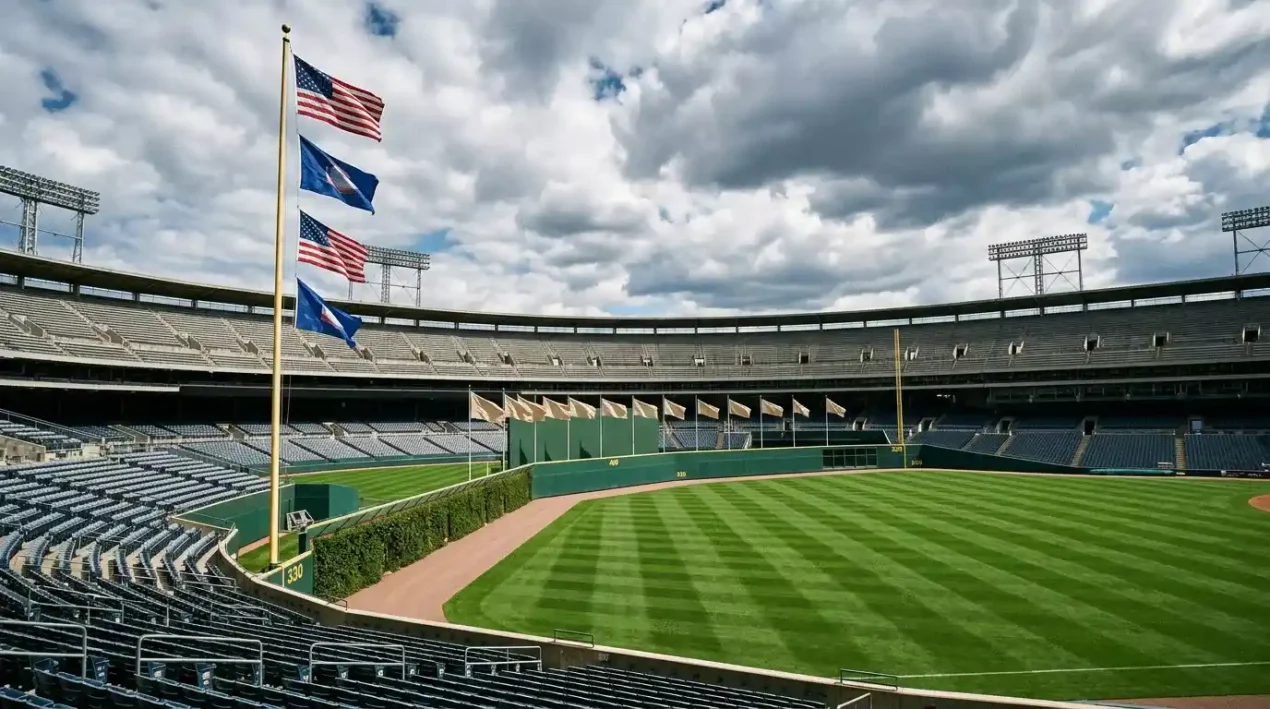
Weather is the matchup input that’s most often underweighted by casual MLB punters and most heavily priced by professional ones. The wind effect at hitter-friendly parks alone can shift a totals line by a full run between the morning forecast and the closing price. This guide walks through which weather variables matter, how they map to totals pricing, and how UK punters can stay ahead of forecast updates that drive the closing line.
Forecasting Wind Direction for MLB Totals
Wind direction and speed are the single biggest weather inputs to MLB totals pricing. A 10mph wind blowing out at Wrigley Field is worth roughly 0.5 runs on the total. The same wind at Coors Field is worth 0.3 runs. At Comerica Park, where the geometry is less wind-exposed, the same wind is worth essentially nothing.
The reason wind matters more at some parks than others is the relationship between fly-ball trajectory and outfield distance. A fly ball at Wrigley that lands 380 feet from home plate is a fly out with neutral wind and a home run with 10mph blowing out. The marginal balls that wind converts to home runs are the ones that decide totals. At Comerica, the deep gaps absorb most of the marginal fly balls regardless of wind, so the wind effect on totals is much smaller.
Wind blowing in does the reverse work. A 10mph wind blowing in suppresses scoring proportionally to how it would boost scoring if reversed. The asymmetry is small at most parks – wind-in and wind-out effects are roughly equivalent in magnitude – but the public’s psychological response to the two is not symmetric. Public bettors typically over-respond to wind-out conditions (chasing overs) and under-respond to wind-in conditions, which creates structural pricing inefficiency on under sides when the forecast turns hostile to hitters.
Temperature and the Ball-Flight Effect
Temperature affects how far a struck baseball travels. A ball hit with the same exit velocity and launch angle travels roughly 5 feet further at 90°F than at 60°F. That sounds small, but it’s the difference between a wall-scraping home run and a long fly out on a meaningful share of fly-ball contact.
The temperature effect compounds with the wind effect. A 90°F game with wind blowing out at Wrigley produces dramatically more home runs than the same lineup match-up at 60°F with neutral wind. Books price the headline cases – heatwave games at hitter-friendly parks – fairly efficiently. Where they price less efficiently is the borderline-cold cases at neutral parks, where a 55°F game-time temperature suppresses scoring by an amount the market often underweights.
Humidity matters less than temperature but it does matter – moist air is denser than dry air and slightly suppresses ball flight. The Coors Field high-altitude effect partially counteracts this, which is why Denver remains the most hitter-friendly environment in the league. Average MLB game time has held at 2:38 in 2025 for the third year running, which means temperature exposure is consistent across the game length and the marginal cold-night effect compounds across the full nine innings rather than playing out in a compressed window.
Rain, Delays, and the Void Question
Rain is a totals-betting variable in two distinct ways. The first is direct – rain reduces ball flight, makes pitching grip difficult, and changes the run-scoring environment when play continues through light precipitation. The second is indirect – rain creates the risk that the game does not reach official status, which voids your wager regardless of the score at the moment.
The article on when MLB bets void covers the settlement mechanics in detail. The relevant point for totals pricing is that a game with elevated rain risk carries an implicit void surcharge for the punter. Even if you correctly identify a totals value on the line, the probability that the game does not complete is non-trivial in certain weather windows, and the expected value calculation needs to account for that.
The forecasting question is whether the rain hits before the game reaches official status (5 innings, or 4.5 with the home team leading) or after. A forecast that calls for thunderstorms at 8pm Eastern for a 7pm game is much more problematic than a forecast that calls for storms at 11pm for the same start time. Books integrate forecast timing into their void-risk modelling, but they integrate it imperfectly and the closing-window forecast updates can produce pricing inefficiencies in either direction.
Indoor vs Outdoor: A Different Analytical Game
The five MLB venues that play with a retractable or fixed roof – Tampa Bay, Toronto, Houston, Seattle, Miami, Arizona, and Milwaukee (with the roof closed) – have substantially less weather variance than open-air parks. For these venues, the weather analytics question is largely whether the roof will be open or closed on game day, which is a more discrete and easier-to-track input.
For these games, the wind, temperature, and rain analysis simplifies dramatically when the roof is closed. The book’s totals price is set against the closed-roof baseline, and weather as an analytical variable essentially drops out. When the roof is open at a retractable venue, the analysis matches an open-air park’s analysis but with the added input that the roof itself might close during the game if conditions change.
For UK punters who want to do weather-driven totals analysis with limited time investment, indoor venues are the games to skip and open-air venues in weather-sensitive cities are the games to focus on. The marginal effort spent tracking forecasts pays off most heavily for Chicago, Boston, New York Mets, Pittsburgh, San Francisco, and Colorado games – the parks where weather variance is highest.
Forecast Sources and Update Cycles
The forecast that matters for MLB totals pricing is the hour-by-hour conditions during the actual game window – typically 7pm to 10pm local time at the ballpark. Daily-summary forecasts are useless for this purpose. The hourly-resolution products from professional weather services, or the publicly accessible hourly forecasts on services like NOAA for US locations, are the relevant inputs.
Books update their totals prices as the hourly forecast refines through the day. Morning forecasts are integrated at line release. Mid-afternoon updates produce mid-cycle line drift. The final forecast in the closing window is where the price settles to its game-time level. A punter who places totals wagers based on the morning forecast is consistently betting into prices that have not yet integrated the closing-window weather picture.
The disciplined practice is to track the forecast through the day, develop a provisional view early, but hold the trigger on totals wagers until the final hour before first pitch. Books take action up to roughly 15 minutes before first pitch on most major markets, and the final forecast picture is usually settled enough by that window to make confident pricing decisions.
What This Means for the UK Punter’s Workflow
The structural recommendation for UK MLB totals bettors is to build weather analysis into the pre-match workflow as a non-negotiable input. For each game on the slate that you’re considering totals action on, the workflow needs to include: hourly forecast for the game window, wind direction and speed estimate, temperature at first pitch and through the late innings, and probability of any precipitation during the official-game window.
This sounds like more work than it is. For a single game it takes about three minutes once you have a routine. The 53 percent of US bettors who wagered on MLB in 2025 mostly do not do this work – public bettors anchor on the line and react to it rather than analysing the inputs that drove the line. The marginal edge for the disciplined UK punter who does the weather work is therefore meaningful and persistent across seasons.
The weather inputs are also among the most stable in terms of analytical value. Pitcher matchups change every five days. Lineup compositions shift through the season. Weather variables stay the same in their effects year over year. A punter who learns the wind sensitivity of every park once is set for life on that input.
Weather and Totals Pricing Questions
The two questions below cover the cases that come up most when newer UK punters start integrating weather into their totals analysis. Both have answers stable enough to memorise.
Does the totals line at indoor stadiums ignore weather entirely?
Largely yes when the roof is confirmed closed. The temperature inside is climate-controlled and there is no wind effect. Weather drops out as an analytical input for closed-roof games.
How early in the day should I check the forecast for an evening MLB game?
A morning check for the day’s outlook is fine. The decision-relevant forecast is the late-afternoon update in the closing window. Place totals wagers in the final hour before first pitch when the forecast is settled.
This material was created by the Mound & Margin team.
Related posts
Unit Sizing & MLB Bankroll Management UK

Algorithmic Projections & MLB Handicapping Models UK