Postponements & MLB Bet Void Settlement Rules
 Available in US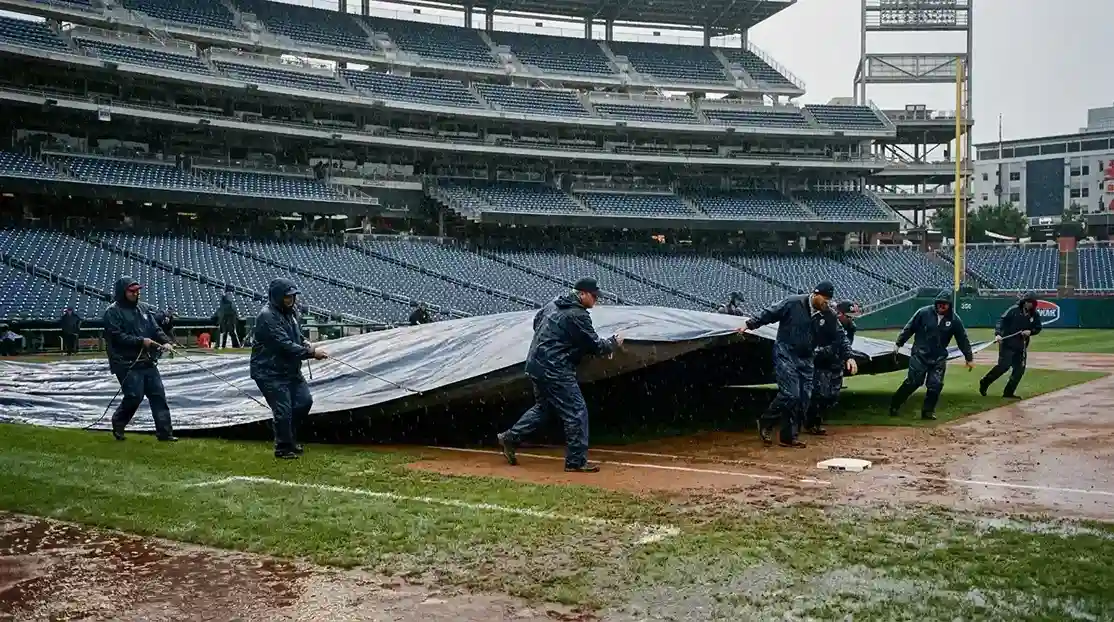
The settlement rules for MLB bets in the UK are not particularly complicated, but they are not intuitive either. The line between a bet that stands and a bet that gets voided depends on rules that vary by market and operator, and the punter who does not know those rules loses money to nothing more dramatic than not reading the small print. This guide walks through how it actually works.
Official Game Classifications for MLB Bet Settlements
The base rule across virtually every UK-licensed operator is straightforward – if MLB declares a game official, the bets stand; if MLB does not, they void. The threshold for an official game is normally five completed innings, or 4.5 innings if the home team is winning when play stops.
That sounds simple. The complication is what “completed” means in edge cases. A game that gets to the top of the fifth, the road team scores three to take the lead, the bottom of the fifth never starts because the rain comes – is that official? Under the league rule it is not, because the home team did not get their half-innings completed. The bet voids even though the game ran longer than 4.5 innings on the clock. I have seen this confuse more punters than any other settlement scenario.
The reverse case is the one that drives the more painful outcomes. A game that reaches the bottom of the fifth, the home team is leading, the game is halted – that game is official. Any moneyline, run line, or first-five-innings wager settles on the score at the moment play was stopped. If you backed the road team at long odds because they were down two going into the fifth, that loss is real and final.
Suspensions and Resumption: A Different Animal
Postponement and suspension are not the same thing, and the bet treatment differs accordingly. A postponement happens before the game starts or before it becomes official. A suspension happens after – the game has reached official status, weather or other disruption halts play, and the league orders the remainder to be completed at a later date.
For a suspended game, the wager treatment depends on the market and the operator. Most UK books settle moneyline, run line, and total wagers based on the final completed score, even if that completion happens two days later. The bet stays open through the gap. Some operators settle markets that are decided in the completed portion of the game on the partial result – first-five-innings wagers are the classic example, since they are technically resolved before suspension if the game ran past five innings.
Listed pitcher wagers add another layer. If a game is suspended and resumes the next day with a different pitcher, the listed-pitcher status of the original wager is preserved or lost depending on the operator’s rules. The article on listed pitcher versus action bets goes through the pitcher-change mechanics in detail. The short version is that resumption with a new pitcher is treated as a separate game for listed-pitcher purposes at most major books, which can void or refund depending on the rule set.
The Rain-Delay Window and Live Markets
Live betting during rain delays creates situations that the average punter does not anticipate. Books suspend live markets the moment a delay starts and reopen them only when play resumes. The closing odds before the suspension are not the opening odds after – the books re-price based on the state of the game and the available information when play restarts.
If the game gets called from a delay and never resumes, every open live bet voids and stakes are returned. That sounds neat in principle. In practice, punters who were holding profitable live tickets at the moment of suspension feel that void as a loss, because they had locked in what felt like a sure win. A 73 percent share of MLB first innings end scoreless – that’s the baseline statistic – but a punter who had backed an under at -300 in the bottom of the seventh and watched the game get rained out is not consoled by base rates. Their stake comes back, their winnings do not.
The structural answer is to read the market rules before placing live wagers in conditions where weather is in play. If you are wagering on a Tampa Bay game during the dome era, the rules barely matter. If you are wagering on a New York game in late July with a thunderstorm watch on the radar, the rules matter enormously.
Run-Line and Total Settlement at Five Innings
Run-line settlement on a shortened official game produces some of the more counter-intuitive results in MLB betting. Books typically settle run-line wagers on the score at the official-game stopping point – five innings, or 4.5 if the home team led when play ended.
That means a -1.5 home favourite can win the official-game ruling but lose the run-line market because they were only up by one run when the game stopped. The reverse is also true for road dogs at +1.5. The closer the run line cuts to the actual score at the stopping point, the higher the chance that the run-line settlement and the moneyline settlement diverge on a shortened game.
Total wagers settle the same way at most books – the final total at the stopping point determines the result. A game that reaches the bottom of the fifth with seven combined runs and gets called settles overs at 6.5 and unders at 7.5. There is no proration for the missed innings, which is the rule that catches casual punters most often. They reason that a five-inning game should settle on a five-inning version of the total. The books do not work that way, with limited exceptions at some smaller operators.
Player Props and the DNP Question
Player prop settlement on shortened or postponed games is the messiest corner of the rule set. The standard treatment is that if the player participated and the game reached official status, the prop settles on what the player did in the completed innings. If the player did not participate at all – DNP – the prop voids.
Strikeout props on starting pitchers are a clean case. The pitcher pitched some innings before the rain, recorded some number of strikeouts, the game becomes official, the prop settles on that number versus the line. Whether the pitcher would have hit a higher number had the game continued is irrelevant.
Hitter props are messier. A hitter who batted twice before the game was called and went 0-for-2 has a hit-or-no-hit prop settled at “no”. A hitter who was scheduled to bat in the bottom of the fifth that never happened might have his prop voided at some operators and settled at others, depending on whether the at-bat in question was deemed available. Read the operator’s specific rules on plate-appearance availability before placing player props in games where weather might compress the action.
What Settlement Mechanics Mean for Stakes and Bankroll
The most important practical effect of these rules is that your effective expected value on a bet placed in a weather-vulnerable game is lower than the implied probability from the odds suggests. The hold percentage that books charge on MLB sits around 10.15 percent on average across markets in 2025, but the void-risk surcharge on weather-exposed games is on top of that for the punter – not as a direct margin but as a structural exposure.
If you are placing significant stakes on outdoor MLB games in spring or autumn, the probability that the game does not reach official status is real and the impact on your bet treatment is non-trivial. The disciplined response is to read the rules, size the stake accordingly, and accept that some percentage of your action will void or settle at a partial-game result that you did not necessarily price into your selection.
Postponement and Settlement Questions Punters Ask
The two questions below come up almost every spring during the early-season rain swing. They are worth memorising rather than re-checking each time, because the answer is the same across the major UK operators and not knowing it causes avoidable confusion.
If an MLB game is postponed and rescheduled, does my pre-match bet carry over?
At most UK operators a fully postponed game that gets rescheduled to a different day voids the original wager and refunds the stake. The bet does not automatically transfer to the new game date.
Does a suspended game that resumes the next day settle on the final score?
Yes for most pre-match markets. The score at the moment of completion on day two is what settles moneyline, run line, and total wagers. Some markets resolved before suspension settle on the partial score.
This material was created by the Mound & Margin team.
Related posts
Unit Sizing & MLB Bankroll Management UK

Algorithmic Projections & MLB Handicapping Models UK